

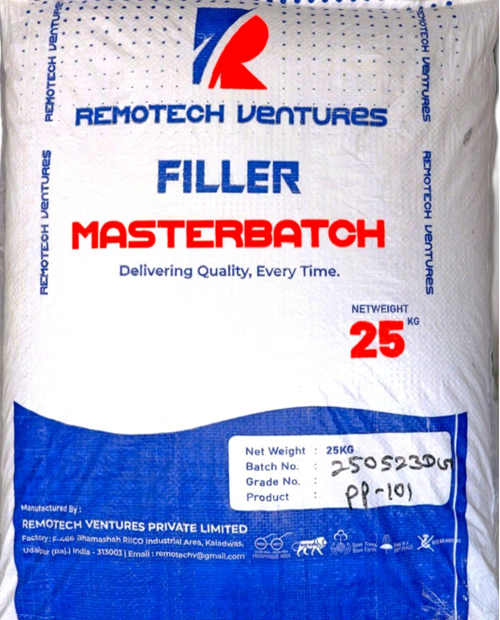
Filler Master Batch
Calcium carbonate (CaCO3) is often used as a filler in polypropylene (PP) to modify its properties and reduce costs. characteristics depend on various factors such as the particle size, loading level, dispersion, and processing conditions. Here are some common characteristics of calcium carbonate-filled PP.
GRADES
We manufacture the following grades.
- Polypropylene Filler
- Low Linear Density Polypropylene Filler
- Transparent Filler
Types of Filler Masterbatch
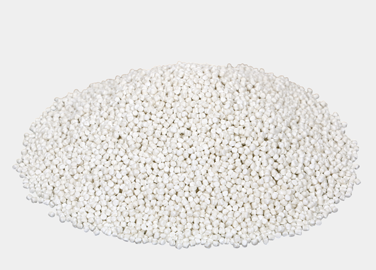
Polypropylene Filler Masterbatch
Low Linear Density Polypropylene Filler
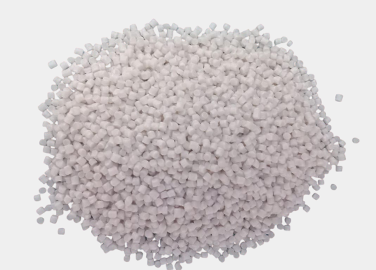
Transparent Filler Masterbatch
Characteristics
- 1. Improved Stiffness :- Calcium carbonate acts as a reinforcing filler in PP, increasing the stiffness and rigidity of the composite material. This can be beneficial for applications requiring structural integrity and dimensional stability.
- 2. Reduced Density :- Calcium carbonate has a lower density than PP resin, so incorporating it into PP formulations can reduce the density of the composite material while maintaining volume. This can lead to weight reduction in the final product, which is advantageous in applications where lightweight materials are desired.
- 3. Enhanced Dimensional Stability :- The presence of calcium carbonate in PP can help minimize shrinkage and warpage during processing, improving the dimensional stability of molded or extruded parts. This is particularly important in applications requiring tight tolerances and precise geometries.
- 4. Improved Heat Resistance :- Calcium carbonate can act as a thermal insulator, which may improve the heat resistance of PP composites. However, excessive loading levels of calcium carbonate can also reduce the heat deflection temperature of the composite material.
- 5. Cost Reduction :- Calcium carbonate is less expensive than PP resin, so using it as a filler can reduce material costs, making the overall production process more economical. This cost reduction is especially significant in applications where price competitiveness is crucial.
- 6. Opacifying Effect :- Calcium carbonate can improve the opacity and whiteness of PP formulations, which is beneficial in applications where aesthetics are important, such as in packaging or consumer goods. This opacifying effect can help mask the inherent translucency of PP.
- 7. Impact on Mechanical Properties :- The addition of calcium carbonate can influence various mechanical properties of PP composites, including tensile strength, elongation at break, and impact resistance. The specific impact depends on factors such as particle size, loading level, and dispersion.